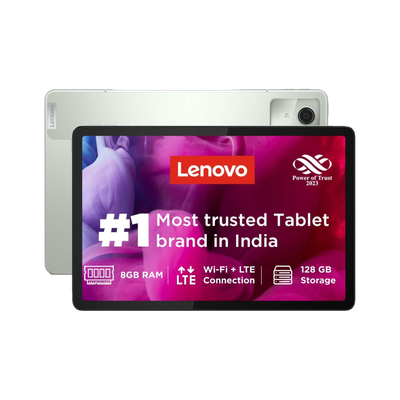
Tab M11 LTE 8 GB RAM 128 GB ROM 11.0 inch with 4G MediaTek Helio G88 Tablet (Seafoam Green)
5 / 48 facts
43 facts missing. Know one? Add itFacts
Identity & launch
- Model year
- not recorded yet
- Model number
The maker's own model code, like SM-S928B. Regional variants of the same marketing name often differ in chipset or bands, and the model number is the only reliable way to tell which one a listing is selling.
- not recorded yet
Display
- Screen size
- 11 inch
- Resolution
Pixel count as width x height. Read it with the screen size: the same 1080x2400 is sharp on a 6.1-inch phone and visibly softer on a 6.9-inch one.
- not recorded yet
- Pixel density
Pixels per inch, which is resolution and screen size combined into the number that actually decides sharpness. Around 400 ppi and above, most people stop seeing individual pixels at normal viewing distance.
- not recorded yet
- Panel type
How the screen makes light. LCD types use a backlight, so black is really dark grey; OLED types light each pixel individually, giving true black and better contrast. LTPO variants can drop their refresh rate to save power.
- LCD
- Backlit panel. Cheapest to make; blacks look grey and contrast is limited.
- IPS LCD
- An LCD with wide viewing angles and more accurate colour than plain LCD.
- TFT LCD
- A basic LCD. Viewing angles and contrast are usually the weakest of the LCD family.
- OLED
- Each pixel makes its own light, so black pixels are fully off. True black, high contrast.
- AMOLED
- Samsung's OLED family. Same self-lit behaviour as OLED.
- Super AMOLED
- AMOLED with the touch layer built into the panel rather than sitting above it.
- LTPO AMOLED
- AMOLED that can vary its refresh rate down to 1 Hz, cutting battery use on static screens.
- LTPO OLED
- OLED that can vary its refresh rate down to 1 Hz to save power.
- MiniLED
- An LCD with thousands of tiny backlight zones, narrowing the contrast gap with OLED.
- not recorded yet
- Refresh rate
How many times per second the screen redraws. 120 Hz makes scrolling look smoother than 60 Hz; the trade is battery, which is why panels that can drop back down to 1 Hz exist.
- not recorded yet
- Peak brightness
How bright the screen can get, in nits, usually quoted as a peak a small part of the screen can hit briefly. This is what decides whether the screen is readable in direct sunlight; makers often quote the peak rather than the full-screen figure.
- not recorded yet
- Screen protection
The cover glass, such as Gorilla Glass Victus 2. Newer generations of the same family are more scratch and drop resistant, and a phone with no stated protection usually has plain glass.
- not recorded yet
Processor & memory
- Processor
- Helio G88
- Process node
How small the chip's transistors are, in nanometres. A smaller number generally means more work per unit of battery, so a 4 nm chip usually runs cooler and longer than a 7 nm one of similar speed.
- not recorded yet
- CPU cores
How many processor cores the chip has. Phone chips mix fast cores for demanding work with efficient ones for background tasks, so the count alone does not rank two chips.
- not recorded yet
- Graphics
- not recorded yet
- RAM
Working memory, which decides how many apps stay open in the background instead of reloading when you switch back. Read it with the RAM type and the software: makers advertise 'virtual RAM' borrowed from storage, which is much slower than the real thing.
- 8 GB
- RAM type
The memory generation. Newer types move data faster and use less power at the same capacity, so 8 GB of LPDDR5X is not the same as 8 GB of LPDDR4X.
- not recorded yet
- Storage
Built-in space for apps, photos and video, before the operating system takes its share. The usable figure is typically 10-20 GB lower than the number advertised.
- 128 GB
- Storage type
How fast the built-in storage is. UFS is several times quicker than eMMC, which shows up in app install times, large file copies and how fast a big game loads.
- not recorded yet
- microSD slot
Whether storage can be extended with a memory card. Cards are much slower than built-in storage, so they suit photos and media rather than apps.
- not recorded yet
Camera
- Main camera
Resolution of the main rear camera in megapixels. On its own it does not predict photo quality: sensor size, aperture and processing matter more, and most high-megapixel phones combine groups of pixels and output a much smaller image by default.
- not recorded yet
- Front camera
Resolution of the selfie camera. Front cameras usually have fixed focus and smaller sensors than the rear main camera.
- not recorded yet
- Max video
The highest video mode the phone records, such as 4K 60fps or 8K 30fps. Higher modes fill storage quickly and some are unavailable on the front camera.
- not recorded yet
Battery & charging
- Battery
Battery capacity in milliamp-hours. Compare it only alongside screen size, panel type and chipset efficiency, since a bigger screen at a higher refresh rate drains a larger battery faster.
- not recorded yet
- Wired charging
The fastest wired charging the phone accepts, in watts. Reaching it usually needs the maker's own charger and cable, and the quoted speed applies to the early part of the charge, not the last stretch.
- not recorded yet
- Charger in the box
Whether a wall charger is included. Many makers now ship a cable only, so hitting the quoted charging speed can mean buying the charger separately.
- not recorded yet
Network & connectivity
- 5G
Whether the phone supports 5G. In India, check the supported bands too: a 5G phone missing the band your network uses locally will fall back to 4G.
- No
- SIM slots
- not recorded yet
- eSIM
Whether the phone supports a digital SIM. An eSIM can be added without a shop visit, and lets a phone hold a travel plan alongside its usual number.
- not recorded yet
- Wi-Fi
The Wi-Fi generation. The phone and the router both have to support a generation for its speed to apply, so a Wi-Fi 7 phone on a Wi-Fi 5 router runs at Wi-Fi 5.
- not recorded yet
- Bluetooth
The Bluetooth version. Later versions add range and lower-power audio, but the headphones have to support the same features for any of it to apply.
- not recorded yet
- USB port
The port and its data speed. All USB-C ports charge, but a USB-C 2.0 port transfers files at a fraction of the speed of a 3.x one, which matters when moving large video files.
- not recorded yet
- 3.5 mm jack
Whether the phone has a headphone socket. Without one, wired headphones need a USB-C adapter or a USB-C connector.
- not recorded yet
- Satellite positioning
Which satellite systems the phone can use to fix its position. Supporting more of them, including India's NavIC, generally means a faster and steadier fix in cities.
- not recorded yet
Software & support
- Operating system
- not recorded yet
- Ships with
The OS version the phone shipped with, such as Android 15. Read it against the update policy: a phone launched two versions behind has already used up part of its support window.
- not recorded yet
- Update policy
How many years of operating-system upgrades the maker commits to. Rarely on a marketplace listing, always on the maker's own page, and together with the security window it decides how long the phone stays safe to use.
- not recorded yet
- Security update window
How many years the maker commits to security patches. This is the fact that decides how long the phone stays safe to bank on, and it is often shorter than the OS upgrade promise.
- not recorded yet
- Interface
The maker's software layer on top of Android, such as One UI or HyperOS. It decides the look, the bundled apps and, on some brands, whether the phone shows ads in system apps.
- not recorded yet
Body & build
- Weight
- not recorded yet
- Dimensions
Height x width x thickness in millimetres. Worth reading with the weight: two phones of the same screen size can feel very different in the hand.
- not recorded yet
- Build
What the frame and back are made of, such as an aluminium frame with a glass back. Plastic backs survive drops better; glass and metal feel more solid and allow wireless charging.
- not recorded yet
- Water and dust resistance
Sealing against dust and water, tested to a lab standard. The first digit is dust, the second water: IP67 survives brief immersion, IP54 only handles splashes. Ratings cover fresh water and are not a warranty against liquid damage.
- None
- No stated sealing. Treat any liquid contact as a risk.
- IP52
- Limited dust protection; resists dripping water at a slight angle.
- IP53
- Limited dust protection; resists light spray.
- IP54
- Limited dust protection; resists splashes from any direction.
- IPX4
- No stated dust rating; resists splashes from any direction.
- IP64
- Fully dust tight; resists splashes from any direction.
- IP65
- Fully dust tight; resists low-pressure water jets.
- IP66
- Fully dust tight; resists powerful water jets.
- IP67
- Fully dust tight; survives immersion to 1 m for 30 minutes.
- IP68
- Fully dust tight; survives immersion beyond 1 m, to the depth the maker states.
- IP69
- Fully dust tight; survives high-pressure, high-temperature jets.
- not recorded yet
- Colours
The finishes this model is sold in. Some colours are exclusive to one storage tier or one region.
- not recorded yet
Sound
- Speakers
How many speakers carry sound. Stereo pairs sound noticeably fuller for video and games; many stereo phones use the earpiece as the second channel, so the two sides are not equally loud.
- not recorded yet
- Bluetooth audio codecs
How the phone compresses audio sent to wireless headphones. Both ends must support a codec for it to be used, otherwise both fall back to SBC, the basic one.
- not recorded yet
Sensors & security
- Fingerprint sensor
Where the fingerprint reader sits and how it works. Ultrasonic under-display readers cope better with wet or dry fingers than optical ones, which light up the screen to take a picture of the fingerprint.
- not recorded yet
- Sensors
The sensors fitted. A gyroscope is the one to check if you care about VR or camera stabilisation, and cheaper phones sometimes emulate a compass in software instead of fitting one.
- not recorded yet
Official sources
- Official spec sheet
A link to the maker's own specification page for this exact model. It is the source a disputed fact here should be checked against, and it outranks any marketplace listing.
- not recorded yet
- Spec sheet version
Which revision of the maker's spec page these facts were read from, as a date or version. Makers quietly edit spec pages after launch, so this records which wording was in front of us.
- not recorded yet
Record oc_a629675b4a51 · Report a wrong fact